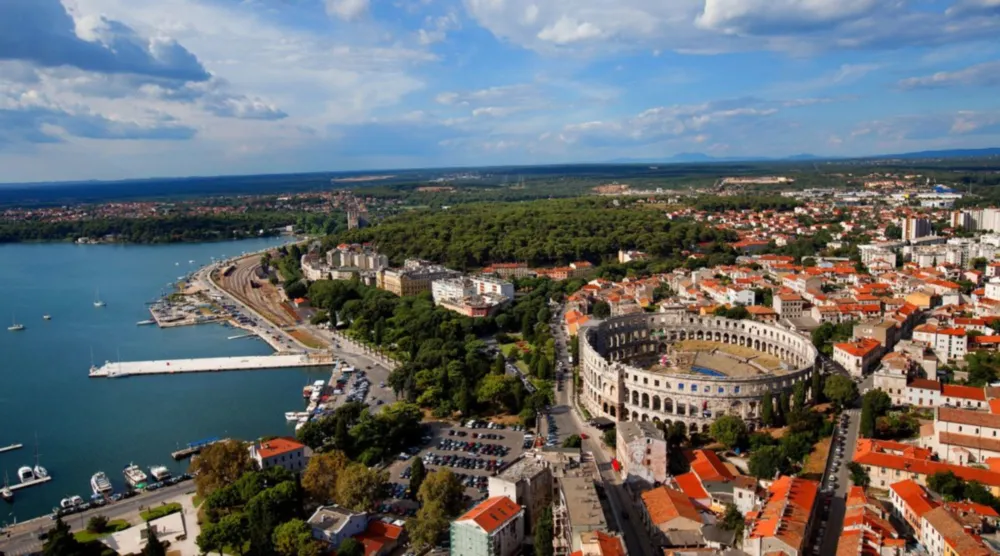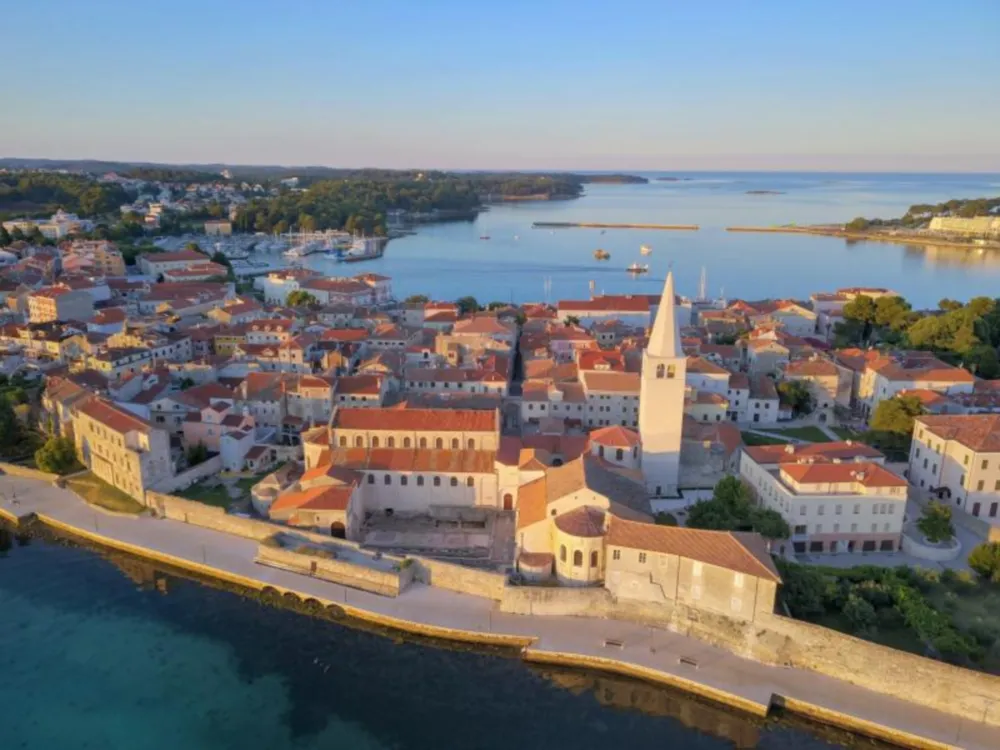
Cobblestoned passages, salt-tanged breezes and limestone facades define Poreč’s pedestrian maze. The old-town quarter sits on a narrow peninsula where the Adriatic laps at medieval walls, creating a compact stage for cafe tables, galleries and artisan workshops. What charms most is the picturesque small-town vibe: laundry fluttering above alleyways, ivy climbing masonry, and the low hum of conversation drifting from shaded courtyards. Whether you enter from the waterfront promenade or weave in from quieter back lanes, the town’s rhythm encourages slow wandering and frequent pauses.
Beneath the polished paving stones lies a Roman blueprint. The principal Decumanus runs east–west, intersected by the north–south Cardo Maximus, and together they organize the streets into a neat lattice. Follow these axes and you’ll pass Gothic windows, Venetian-era palazzi, tiny chapels and timeworn wells. The town’s street network makes orientation easy: drift off into intimate cul-de-sacs for secrets and rejoin the main thoroughfares for bustle. This blend of ancient order and lived-in spontaneity is the backbone of the townscape.
A few steps from the Cardo rises the Euphrasian Basilica, a 6th-century complex inscribed on the UNESCO World Heritage list. Its gold-ground mosaics shimmer like a sunrise, while the atrium, baptistery and bishop’s palace reveal layers of late antiquity and Byzantine artistry. Street views frame the bell tower between rooflines; turn a corner and the basilica suddenly fills the perspective. Beyond worship and architecture, this UNESCO World Heritage–listed site anchors daily life: schoolkids shortcut across the courtyard, couples rest on stone benches, and organ notes sometimes spill into adjacent lanes.
Look up along Decumanus and side alleys to spot medieval domestic architecture. One standout is a Romanesque-style house whose upper floor projects slightly over the roadway, supported by corbels and crowned with wooden balconies. These timber details once served practical functions—shade, ventilation, extra living space—yet today they lend theatrical texture to the skyline. Several Romanesque houses retain carved lintels and arched portals; their rough-hewn blocks contrast beautifully with later Renaissance smoothness. Pause beneath a timber-built balcony and you can almost hear the creak of centuries.
Poreč’s sociable heart beats in its piazzas and along the Riva. Morning brings market chatter, clinking espresso cups and soft footsteps on flagstones; afternoons trade shade for sea wind as shutters click and shopkeepers greet passersby. Streetlife here is measured rather than hurried—children chase pigeons across sunlit slabs, cyclists glide silently, and street-side musicians set an easy tempo. Wander toward the breakwater to watch boats nose into the harbor, then return to the inner squares where fig trees perfume the air.
Galleries and ateliers open onto narrow passages, their canvases borrowing hues from the coast—cobalt, coral, and olive green. Evenings, the lanes transform into an alfresco dining room. Truffle-scented pastas, Istrian prosciutto, and just-landed seafood pair with local Malvazija and Teran pours to create unique dining experiences. Choose a stone-walled konoba for a uniquely memorable dining experience, or grab a street-side table for people-watching while cicadas provide the soundtrack. Dessert might be fritule dusted with sugar, enjoyed under a balcony strewn with bougainvillea.
The peninsula setting keeps distances short, ideal for families and relaxed travelers. Strollers navigate best along the broader arteries, with occasional detours around steps. Many cafes offer high chairs, and shaded squares invite breaks. For visitors with mobility concerns, target the flatter stretches of Decumanus and the waterfront, where curb cuts and gentler gradients make the experience smoother.
Choose a guesthouse within the old-town district to wake up to church bells and slip into the lanes before day-trippers arrive. Boutique hotels often occupy restored townhouses with stone arches, while apartments tuck above shops for a lived-in feel. If you prefer quieter nights, opt for accommodations just beyond the peninsula and stroll in at dawn or dusk, when the town’s character glows brightest and the streets belong to walkers.


Opening hours
Monday – Friday: 09:00 – 20:00
Saturday: 10:30 – 22:00